Deploying application on Linux Instance
Deploy applications on Linux
We use git to clone the source code. First of all, install git with the following command:
sudo dnf install git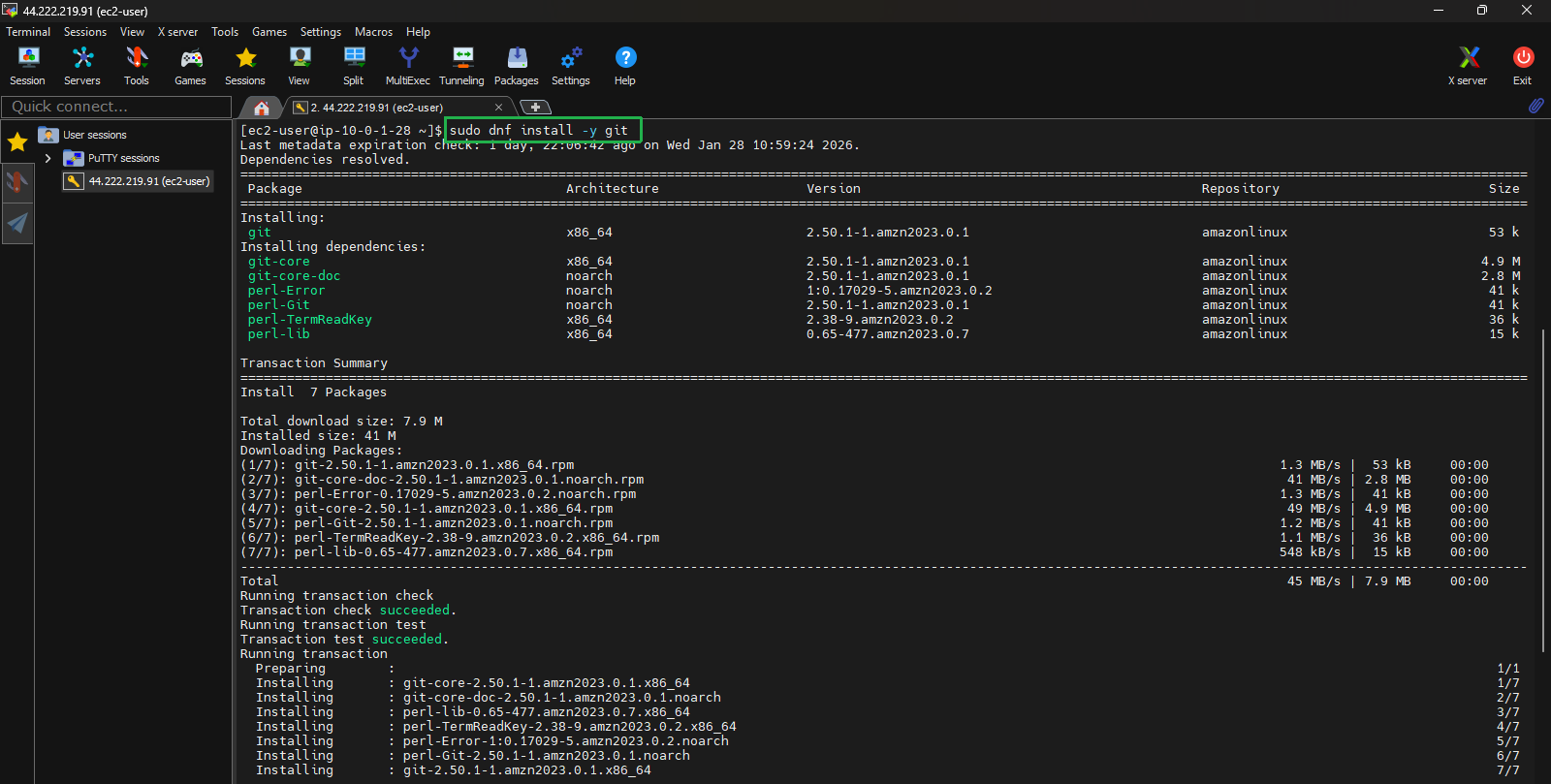
Check successful git installation with command
git version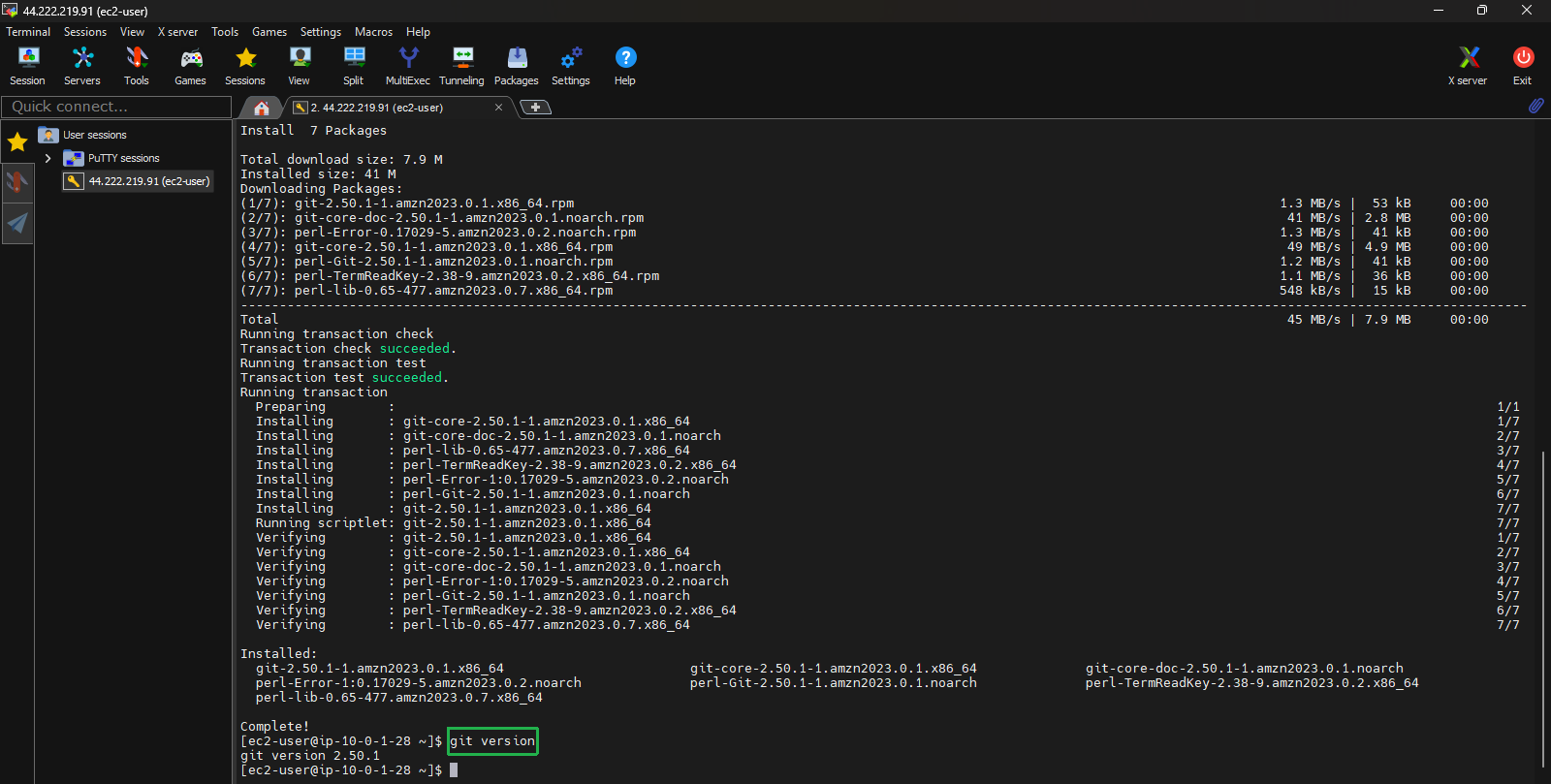
Clone repository application code
cd ~ec2-user
git clone https://github.com/First-Cloud-Journey/000004-EC2.git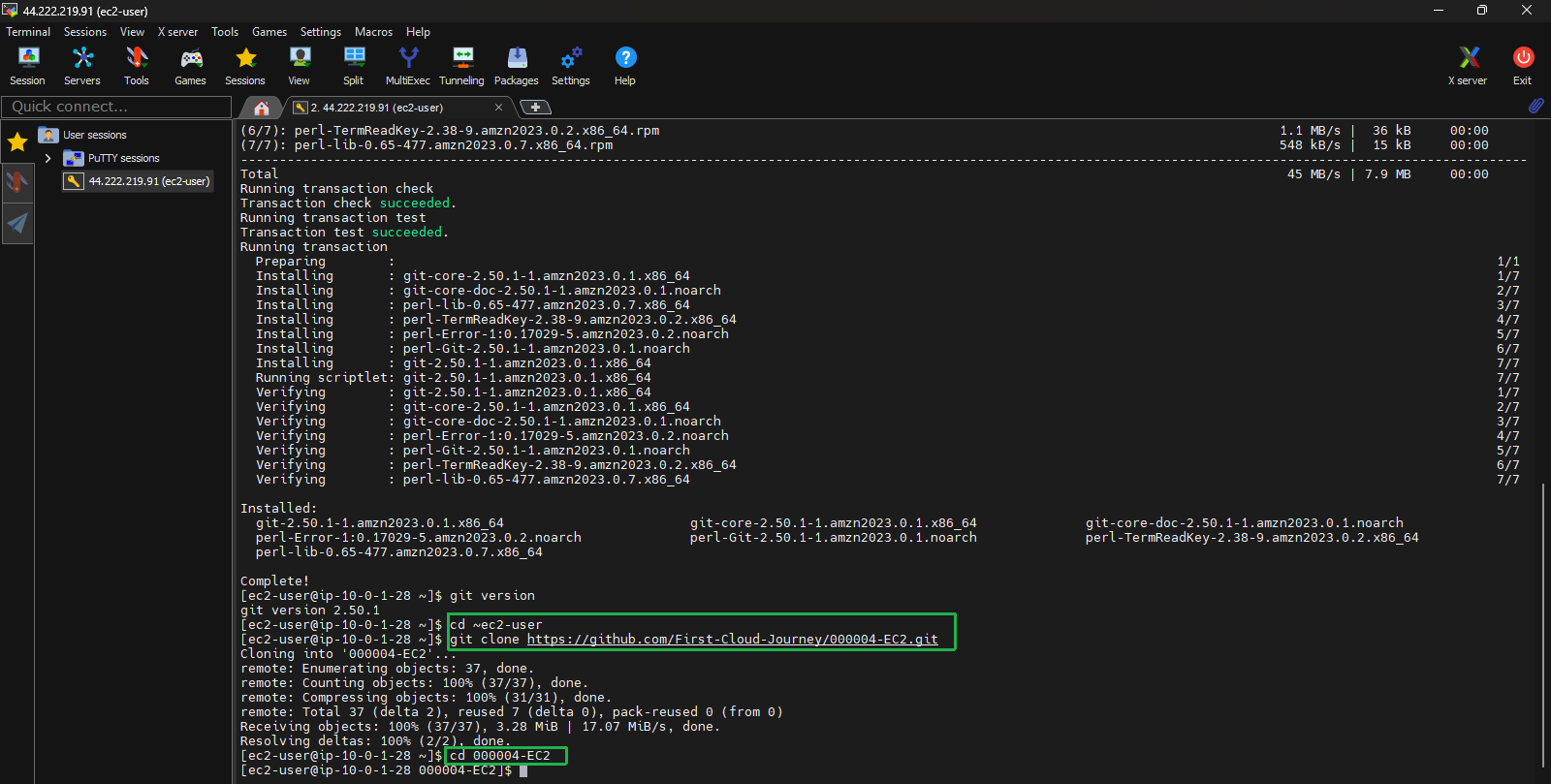
Go to the lab directory 000004-EC2 and check the files
cd 000004-EC2ls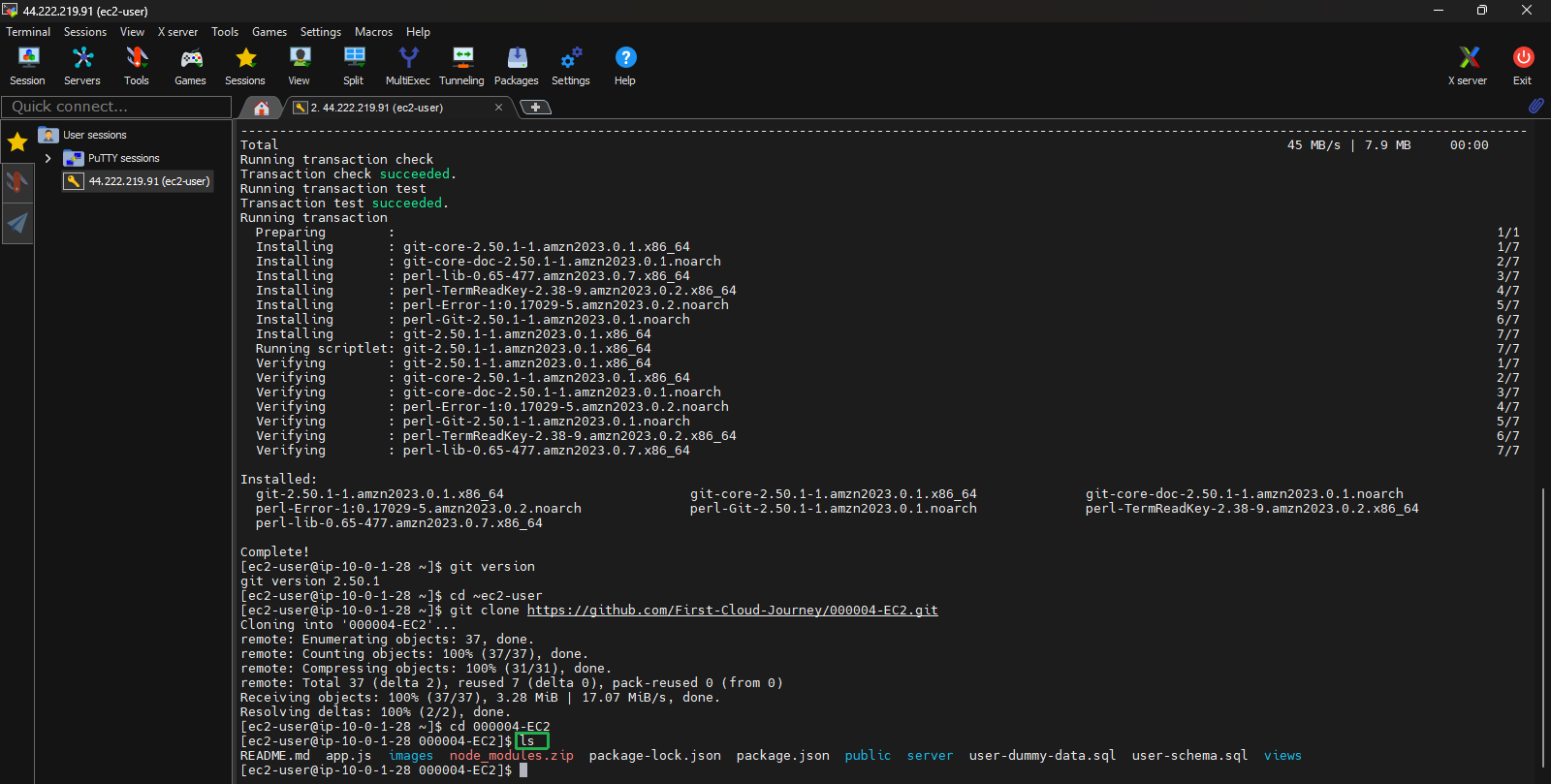
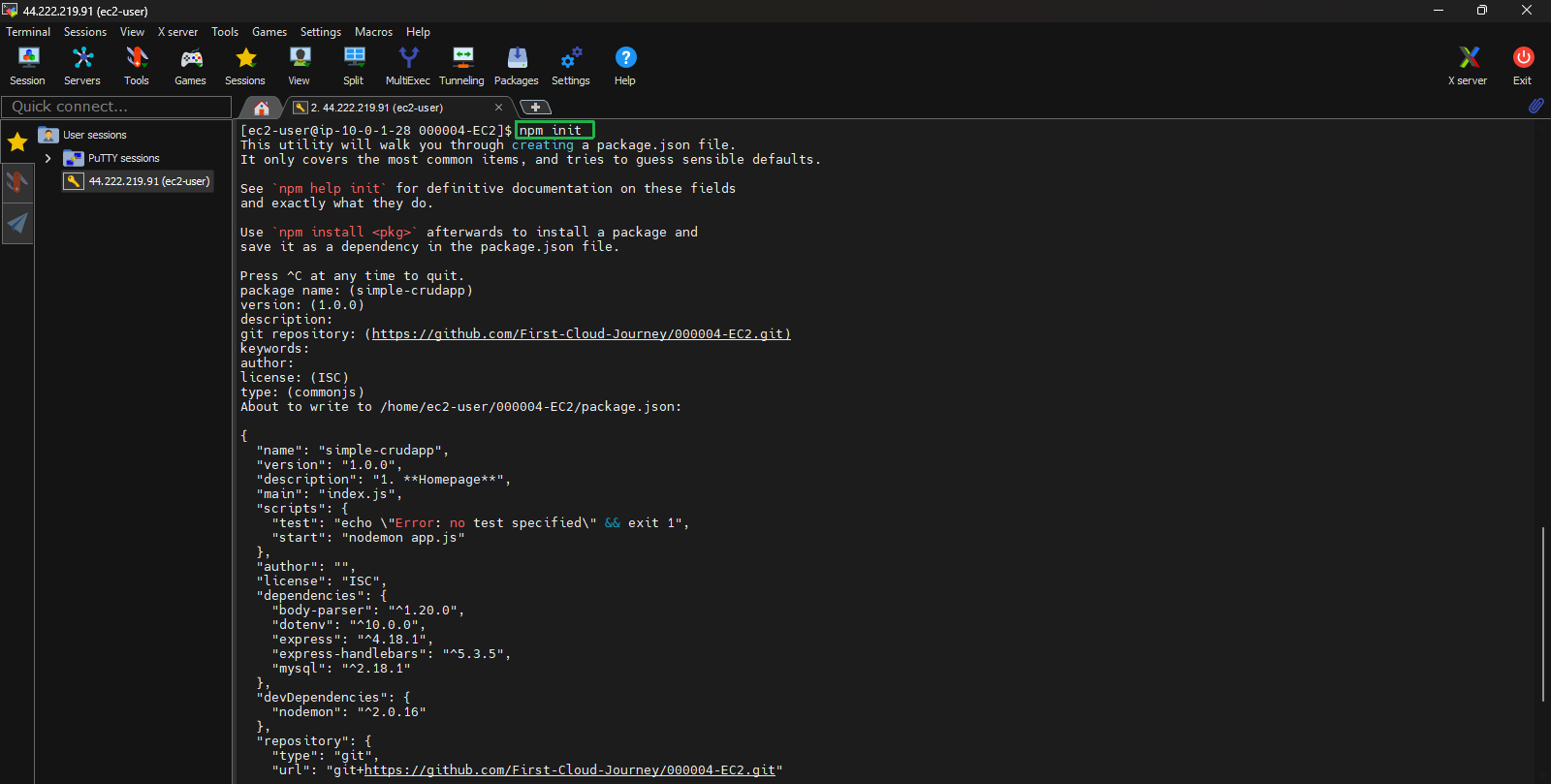
NPM stands for Node package manager and is a tool to create and manage Javascript programming libraries for Node.js. Using npm init to initialize the project will generate a sample package.json file.
npm initNote: You proceed to configure the application’s information and it is saved in the file package.json
Next we do dependencies installation
- express
- Dotenv
- express-handlebars
- body-parser
- mysql
npm install express dotenv express-handlebars body-parser mysql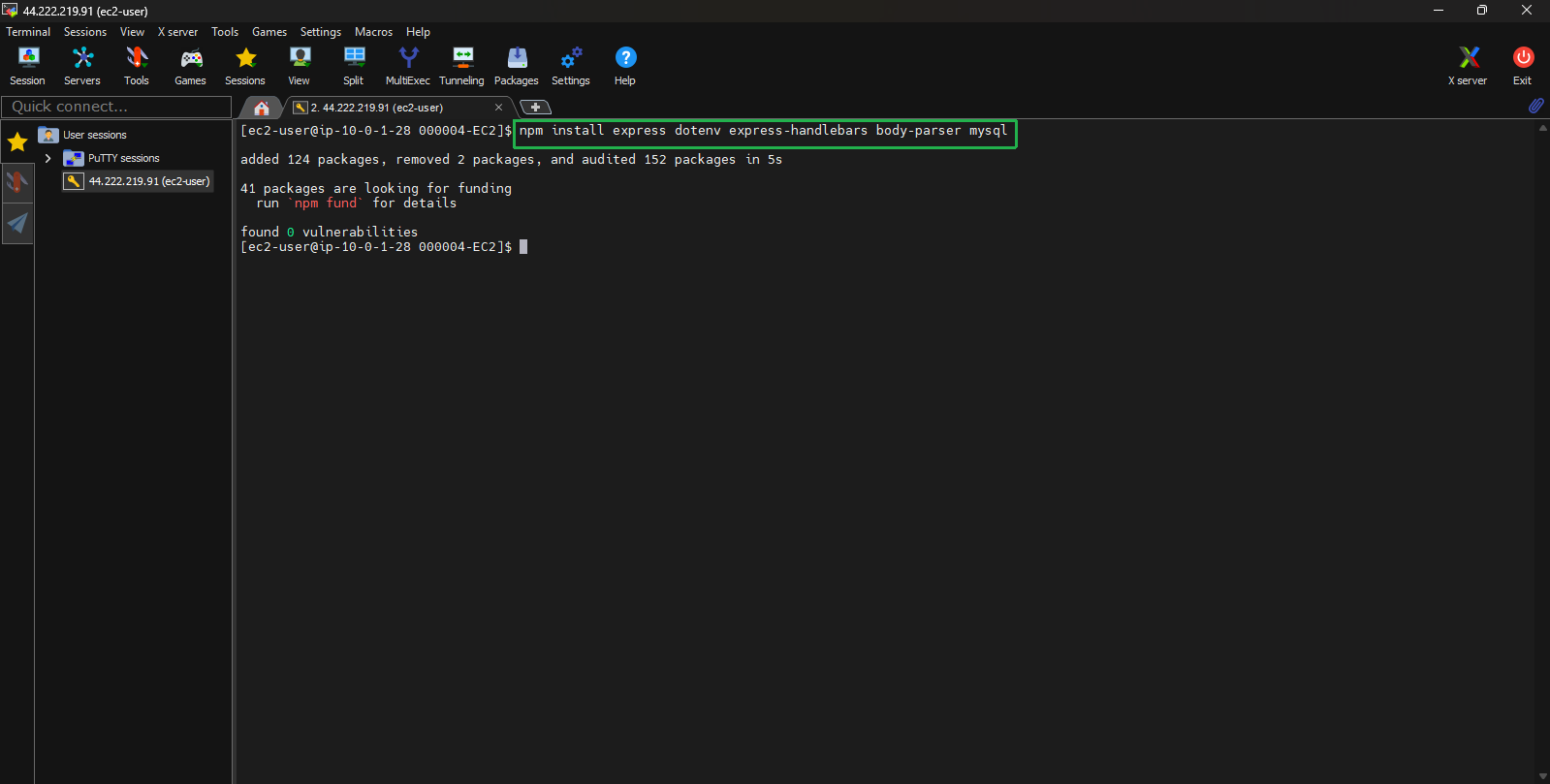
! How to Fix Vulnerabilities Related to Nodemon If the number of vulnerabilities is greater than 0 after running
npm updateandnpm audit fix, you can try removing and reinstalling nodemon by following these steps:- Step 1: Remove nodemon:
npm uninstall nodemon- Step 2: Install the latest version of nodemon:
npm install nodemon@latest --save-dev- Step 3: Check vulnerabilities again
npm audit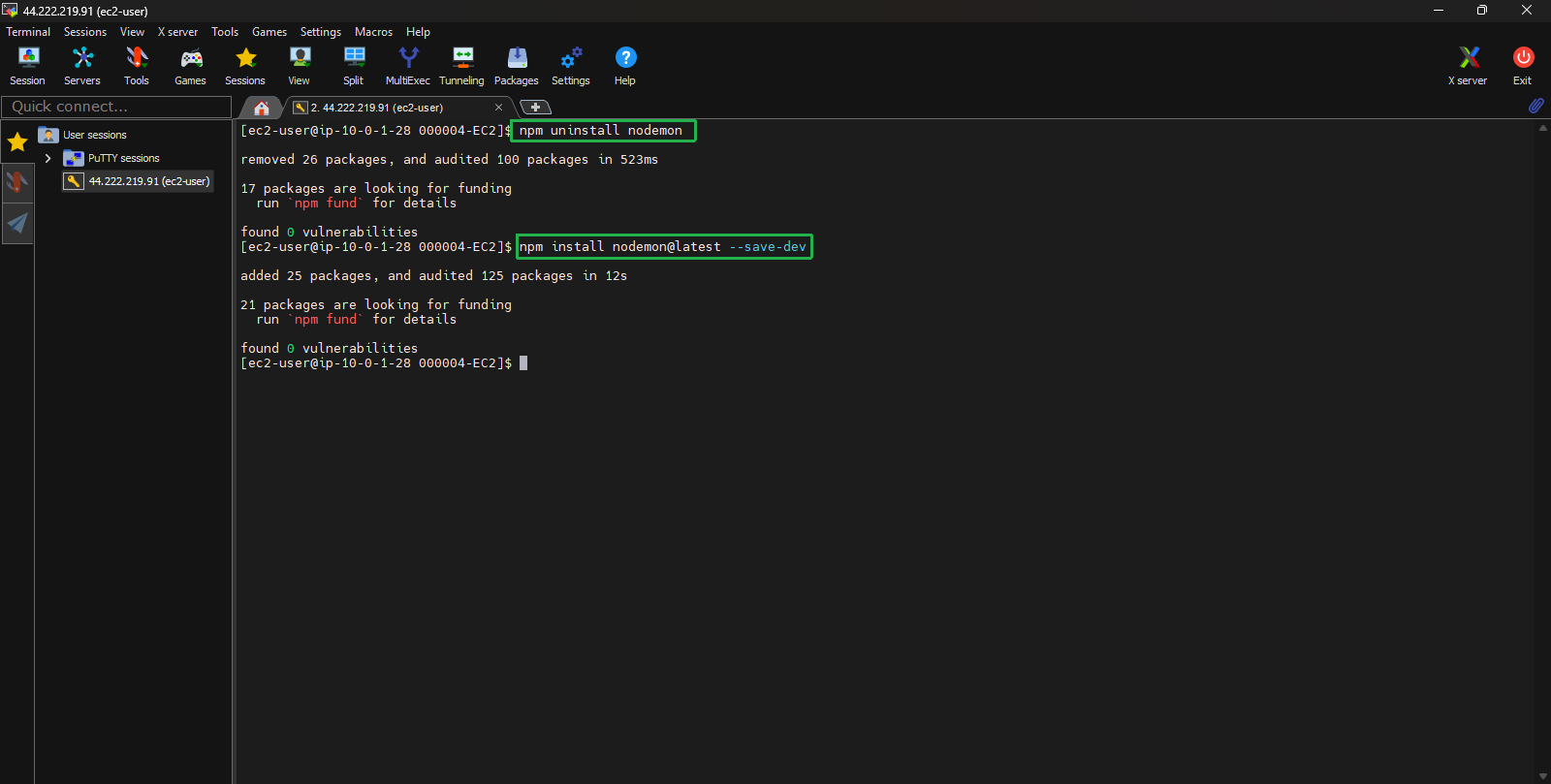
Explanation:
- nodemon is a development tool that automatically restarts the application when code changes.
- Older versions of nodemon may include dependencies with security vulnerabilities.
- Reinstalling nodemon updates its dependencies to safer versions.
Check the installed dependencies. The node_modules folder appears.
ls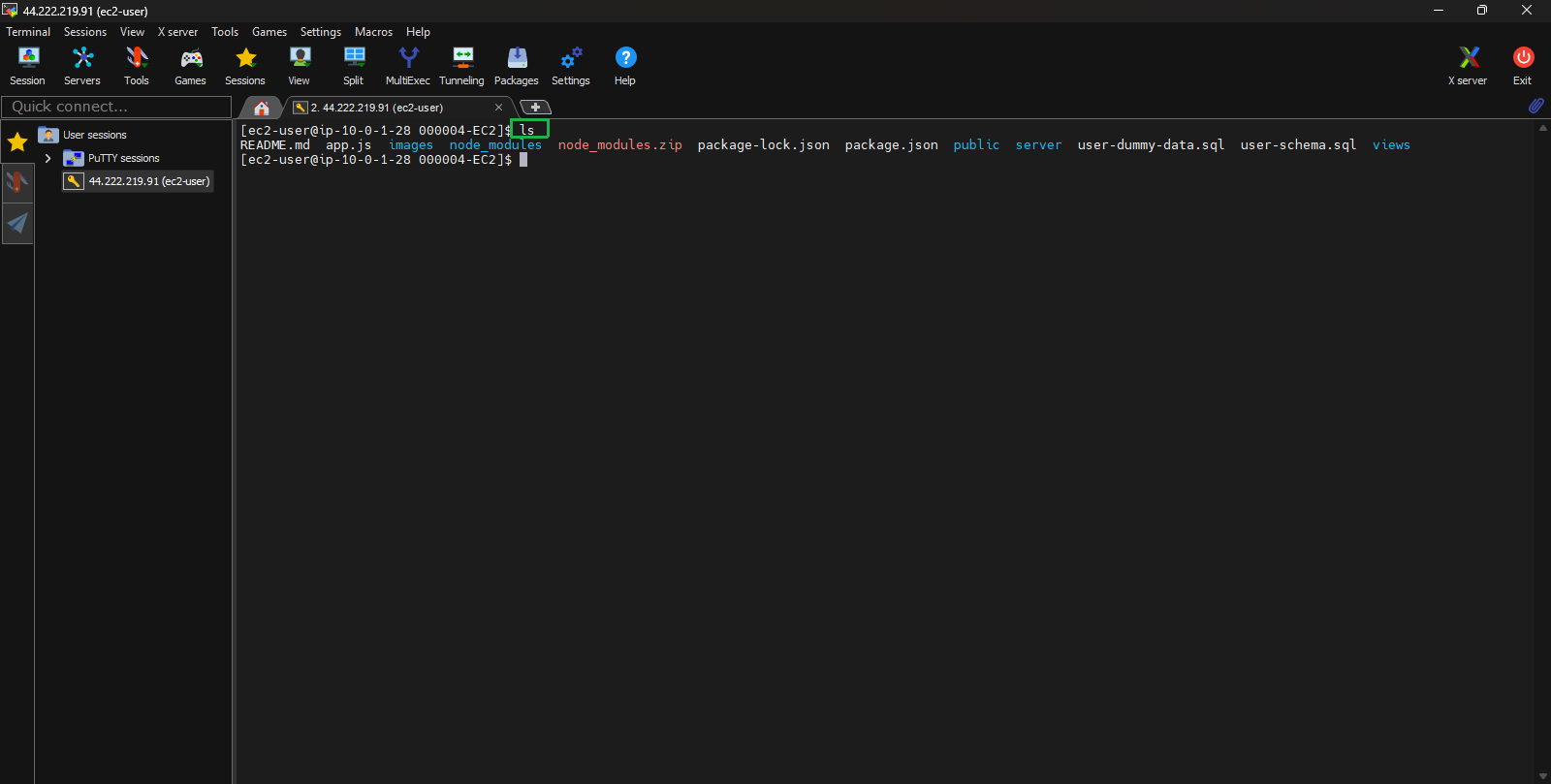
Create file .env
touch .env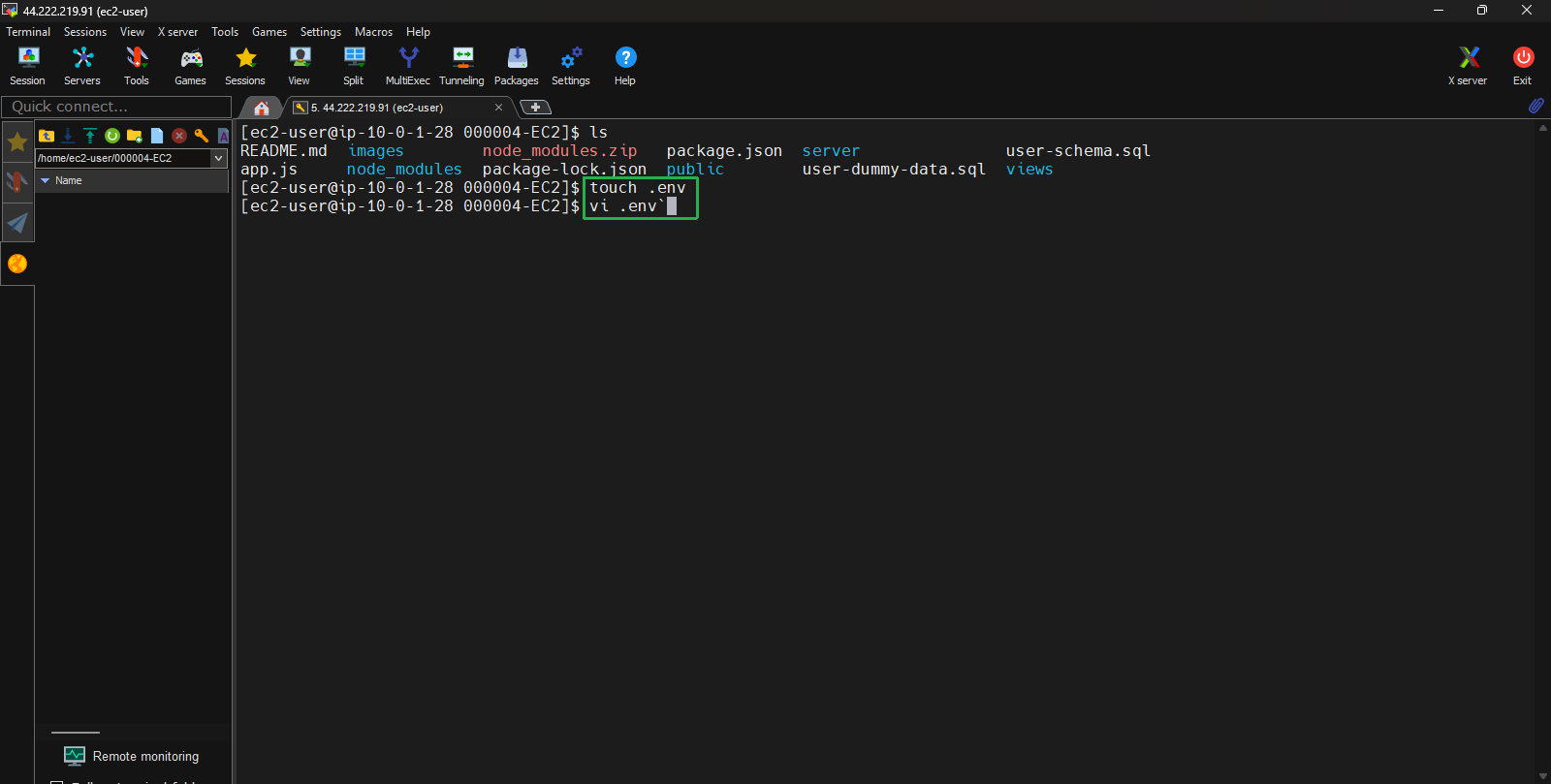
Use vi to edit the .env file. We perform the database configuration:
DB_HOST=localhost
DB_NAME=awsuser
DB_USER=root
DB_PASS=password
Quick Guide to using vi/vim:
Open a file:
vi <filename>Enter insert mode: Press
iSave and exit: Press
Esc, then type:wqand press EnterQuit without saving: Press
Esc, then type:q!and press Enter
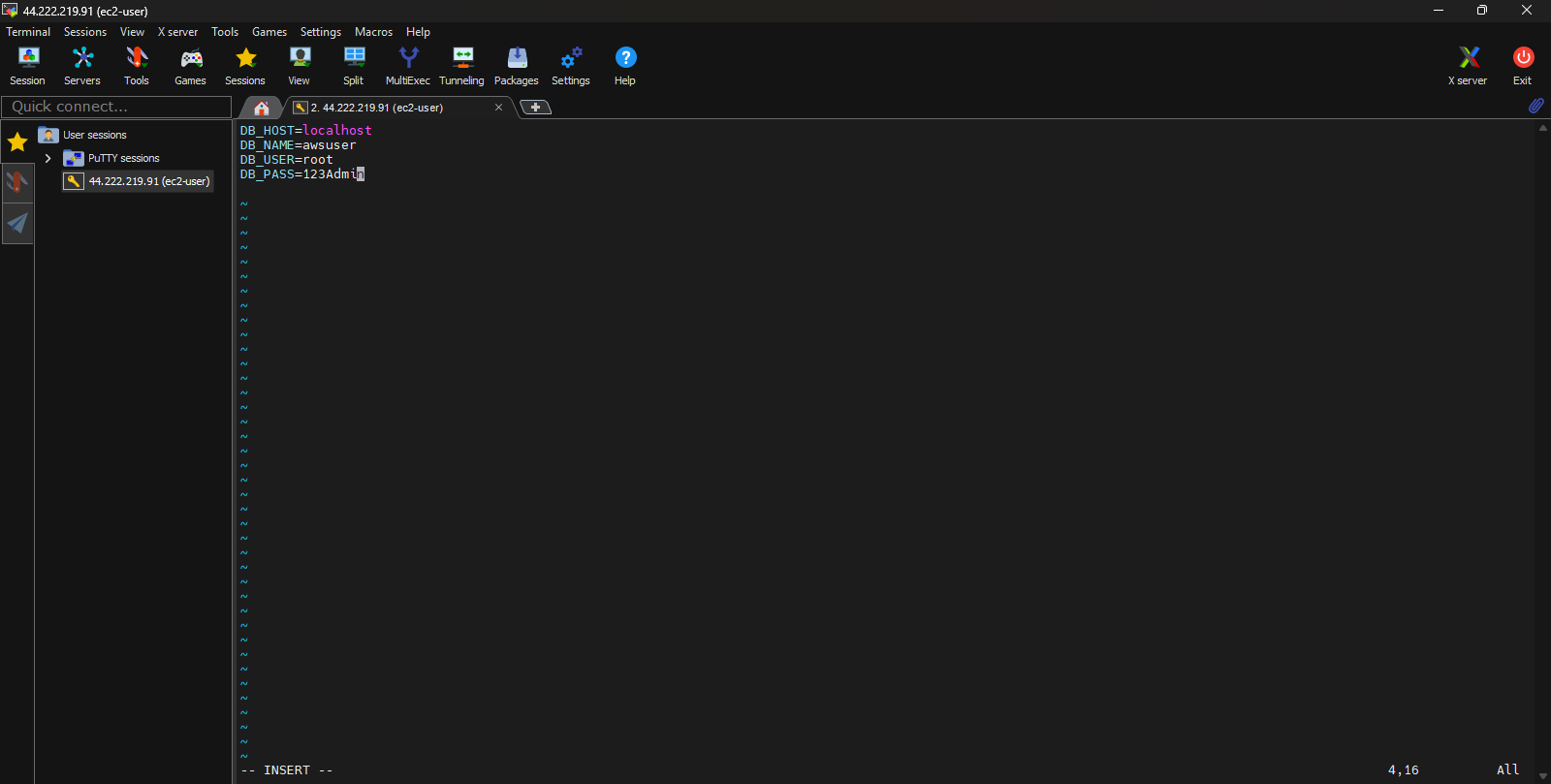
In the lab we use the database name awsuser and the database information has been configured in the database security configuration step (password: 123Admin)
Check database configuration
ls -a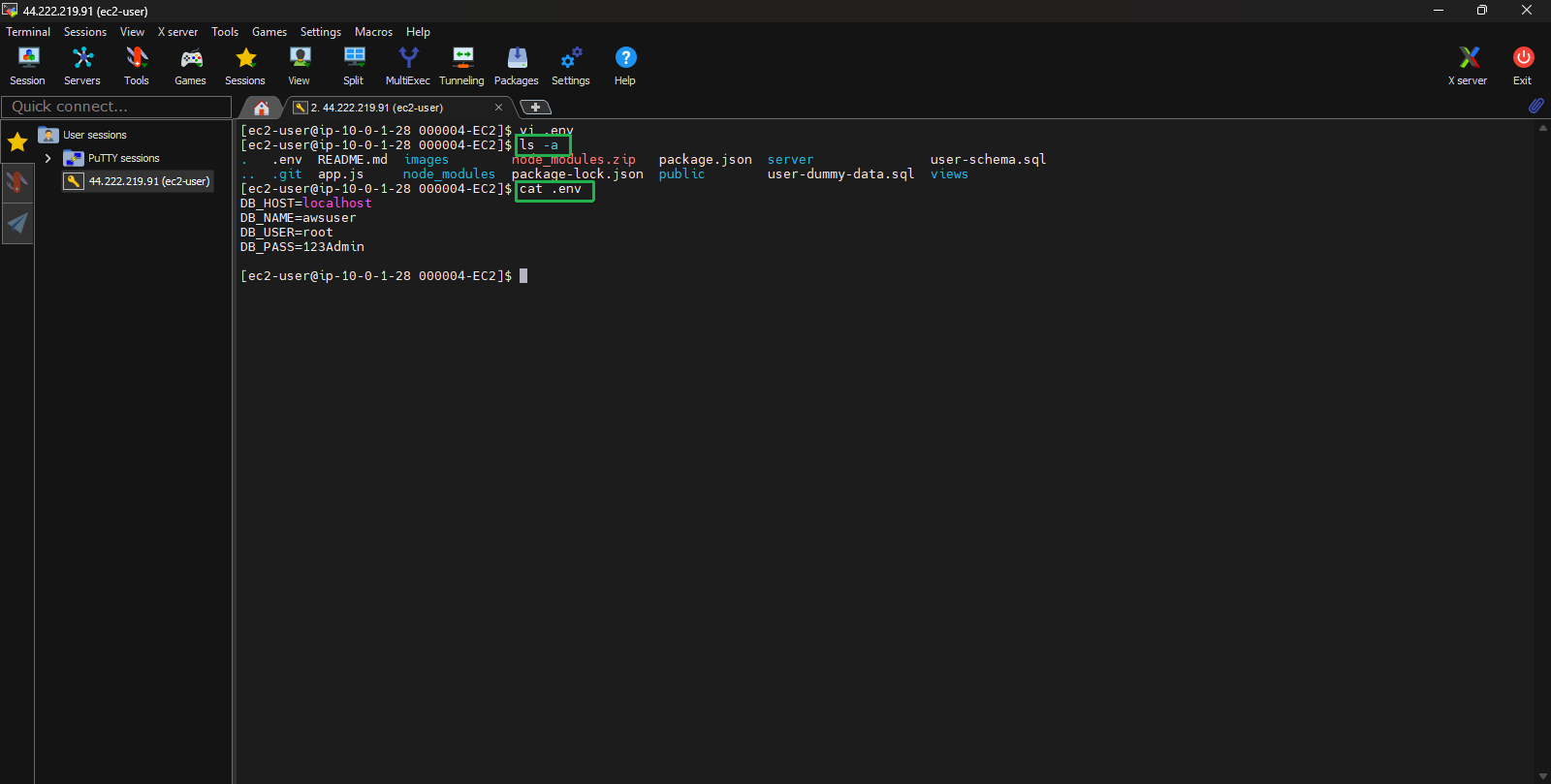
Start local server
npm start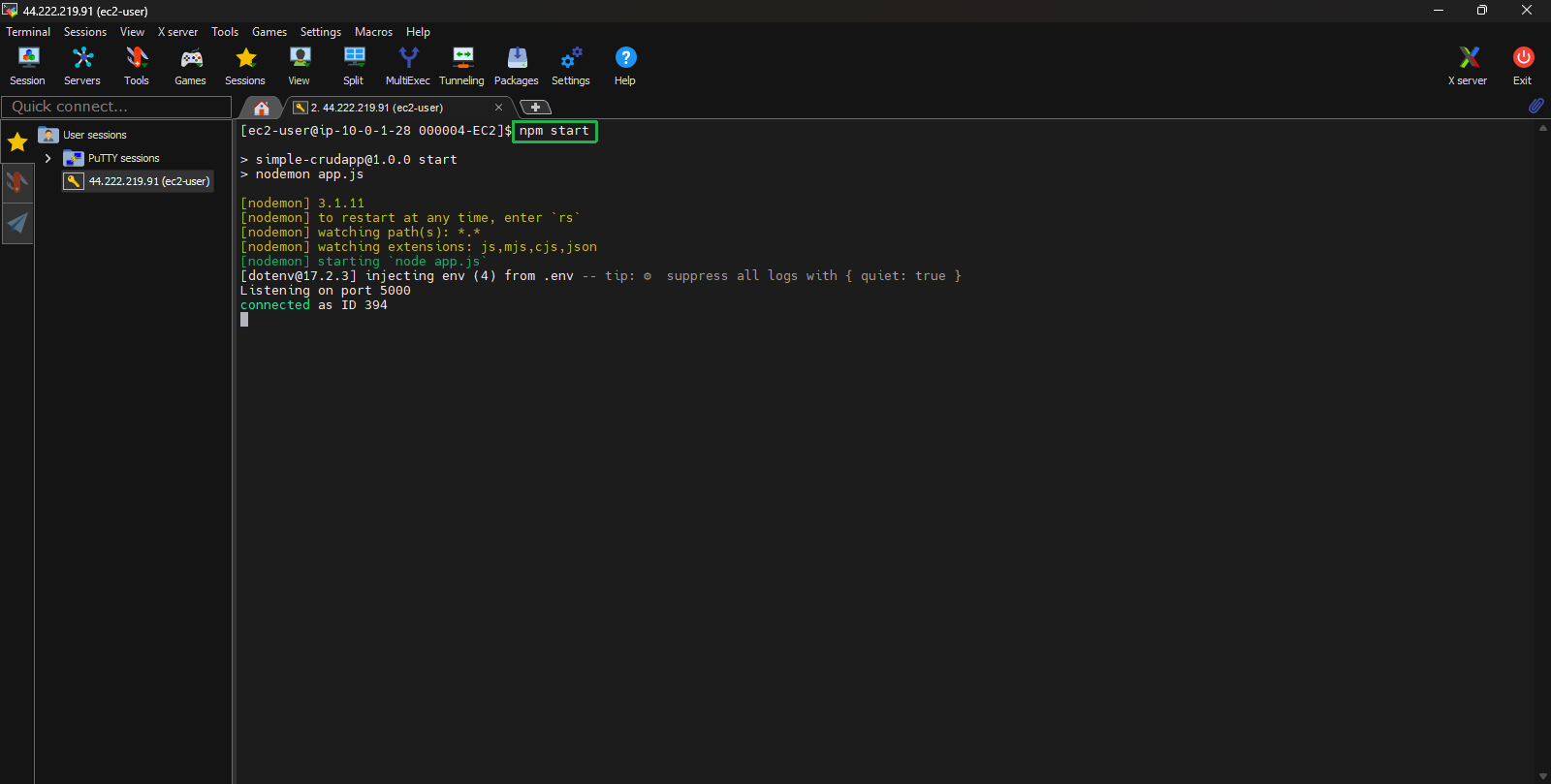
! Fix TypeError: exphbs is not a function (Express Handlebars)
- Problem: When starting the Express application, the following error appears:
TypeError: exphbs is not a function
Cause: Newer versions of express-handlebars changed how the module is imported and initialized. The old syntax is no longer supported.
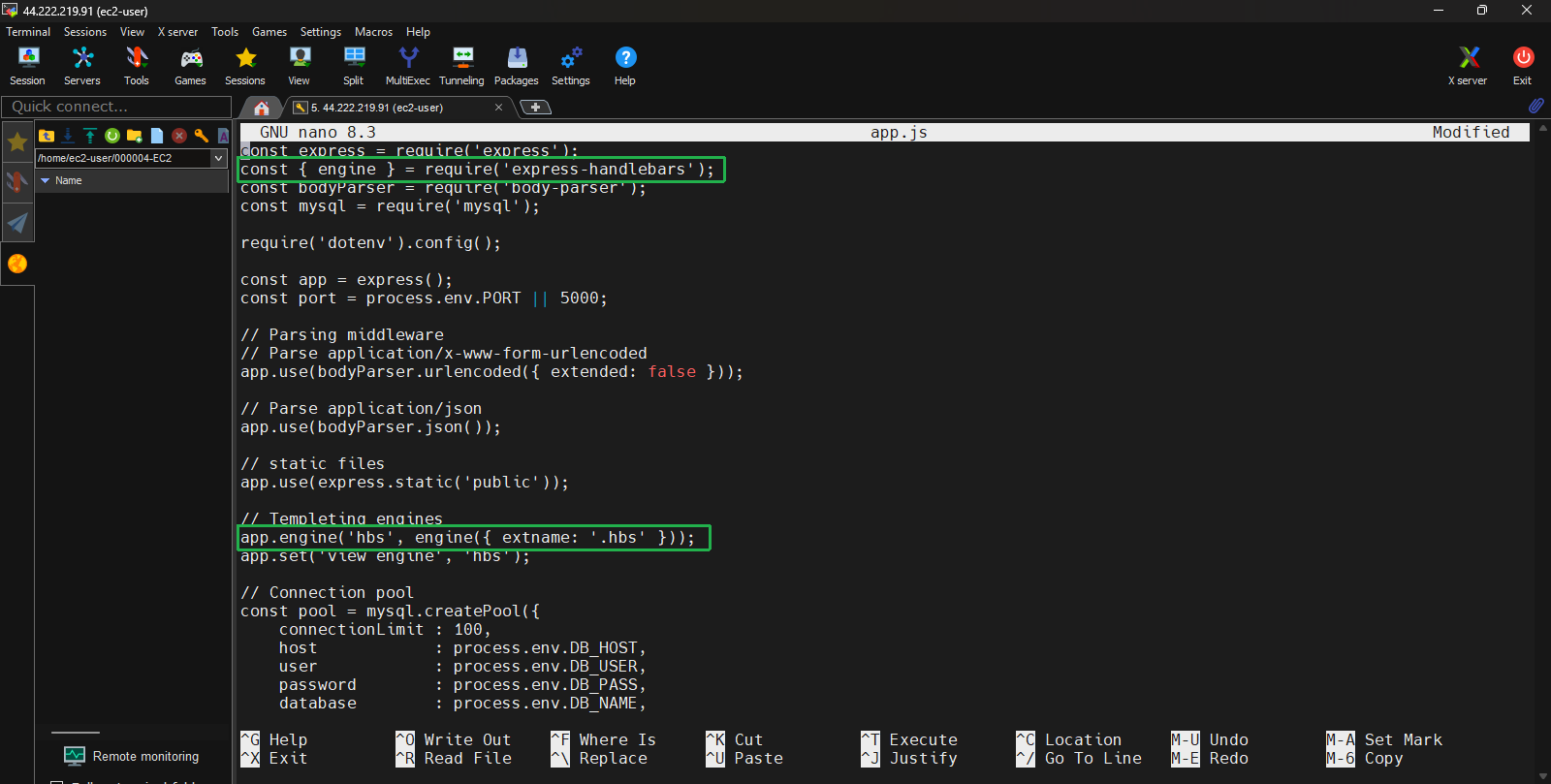
Solution: You can use ‘vi’ or ’nano’ to edit file app.js, replace:
const exphbs = require('express-handlebars');with:
const { engine } = require('express-handlebars');- And
app.engine('hbs', engine({ extname: '.hbs' }));with:
app.engine('hbs', engine({ extname: '.hbs' }));
In the EC2 interface
- Select Instances
- Select Linux-instance
- Copy Public IPv4 DNS address
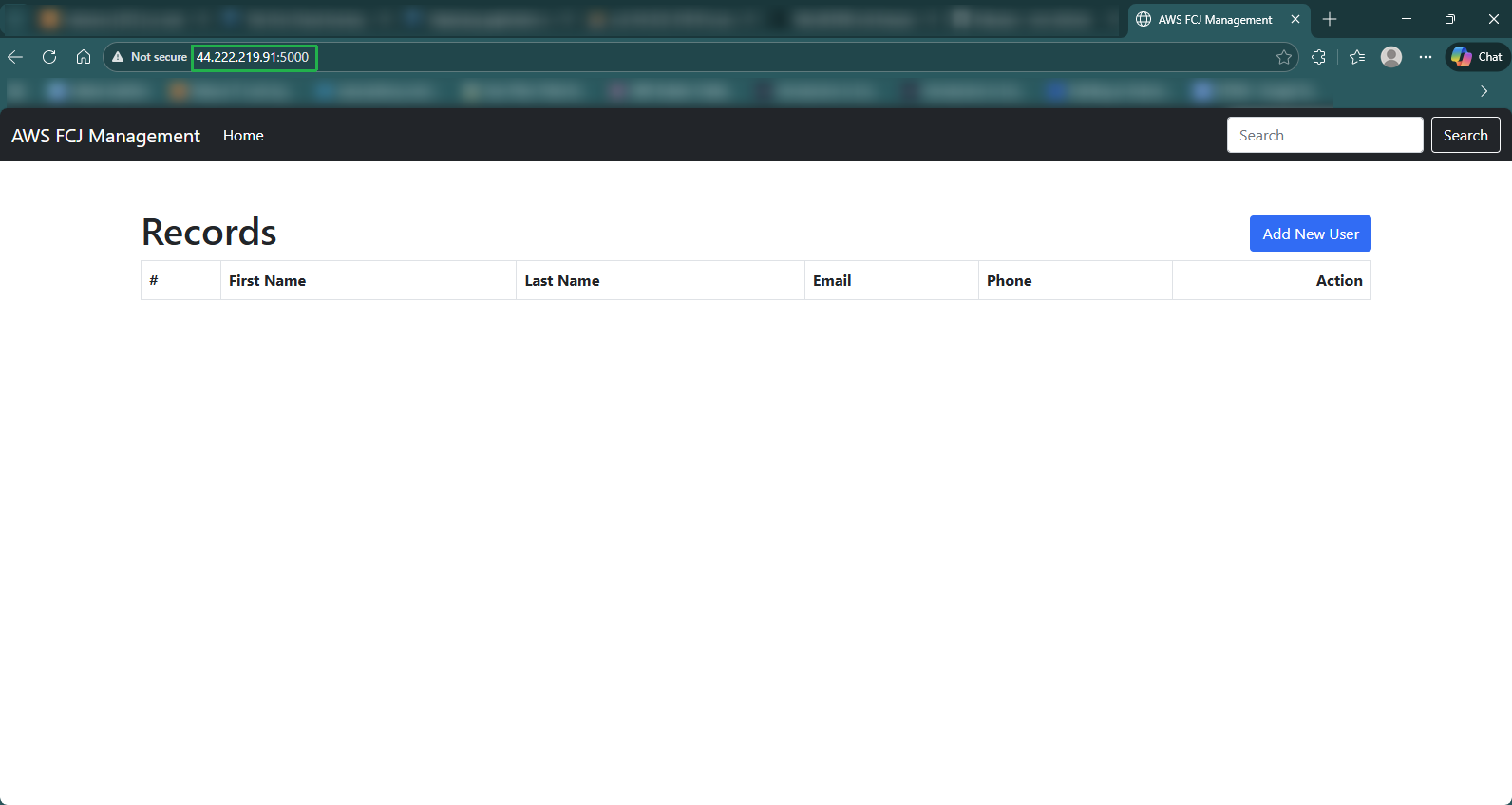
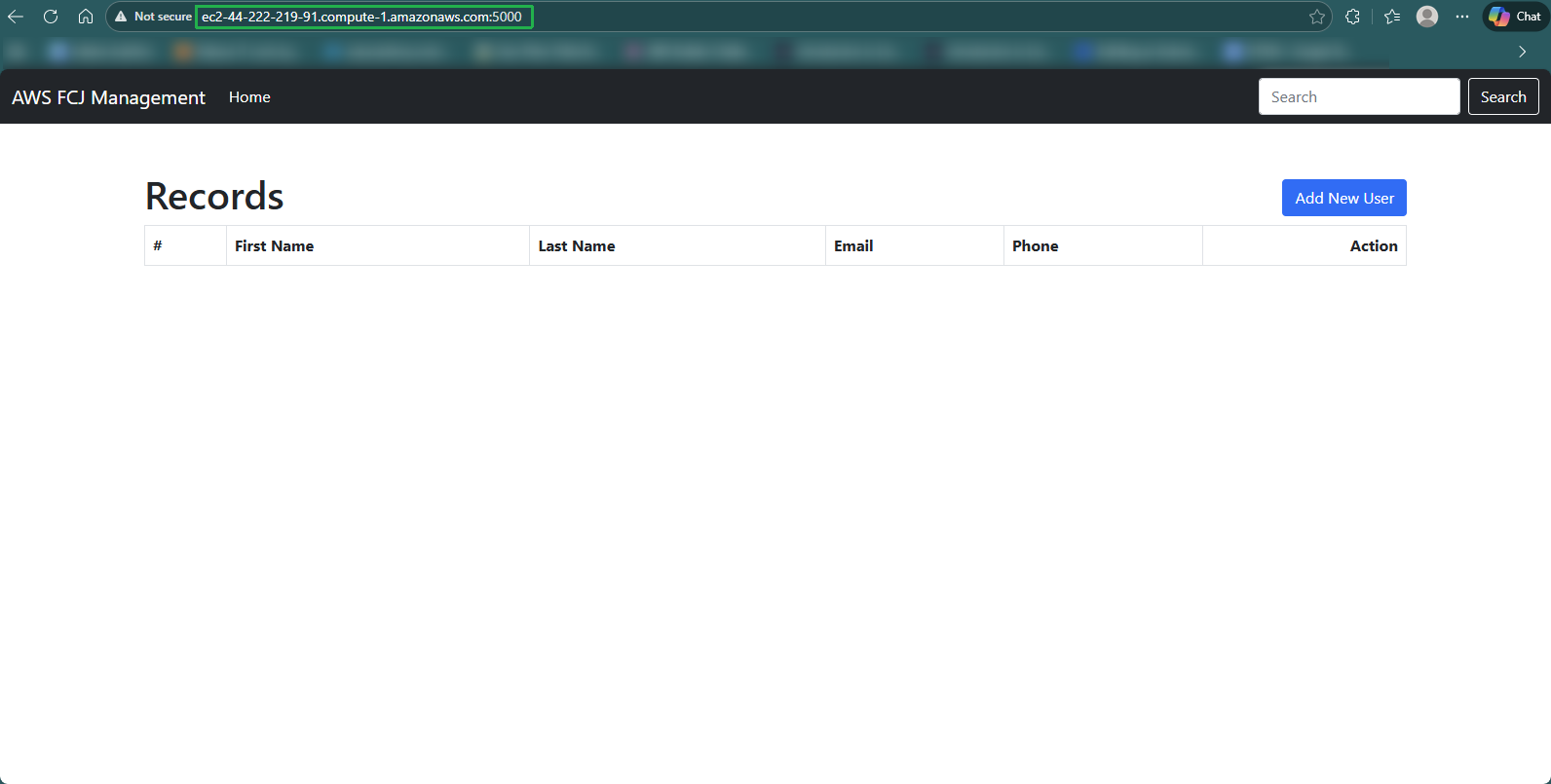
Paste Public DNS IPv4 address into the browser and port 5000. Observe the AWS FCJ Management interface
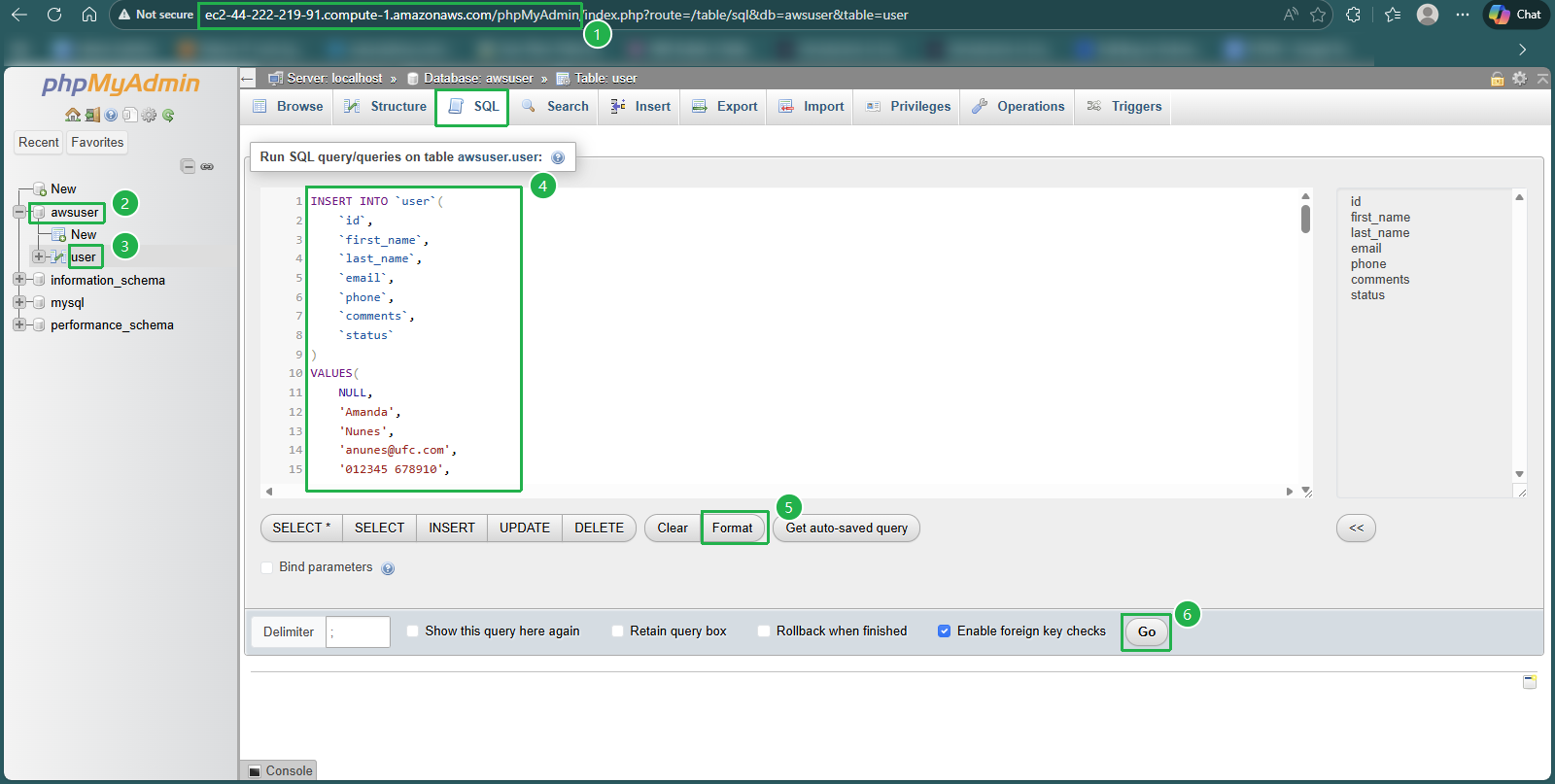
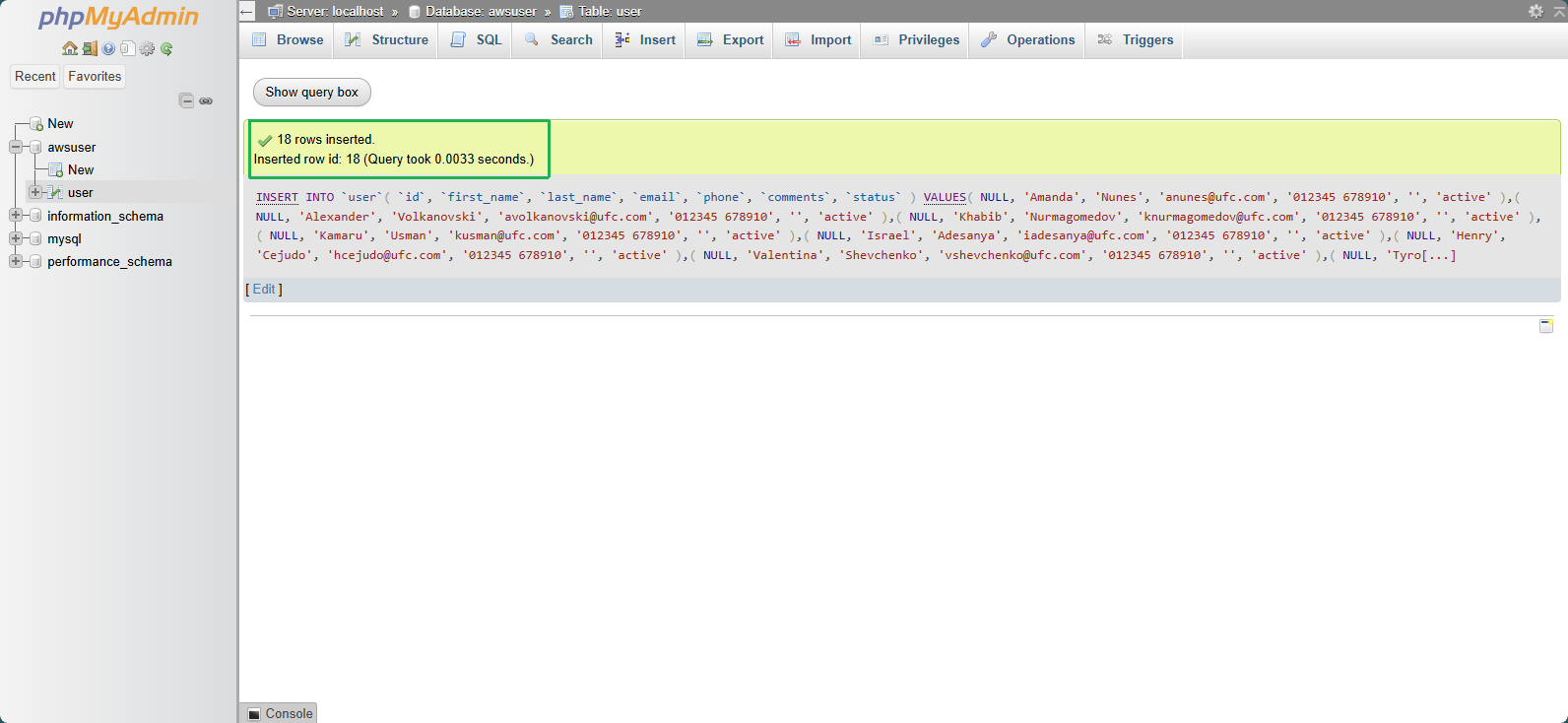
In the phpMyAdmin interface, we execute SQL Dummy Data
- Select awsuser database
- Select SQL
- Paste the SQL query code in
INSERT INTO `user` (`id`, `first_name`, `last_name`, `email`, `phone`, `comments`, `status`) VALUES (NULL, 'Amanda', 'Nunes', 'anunes@ufc.com', '012345 678910', '', 'active'), (NULL, 'Alexander', 'Volkanovski', 'avolkanovski@ufc.com', '012345 678910', '', 'active'), (NULL, 'Khabib', 'Nurmagomedov', 'knurmagomedov@ufc.com', '012345 678910', '', 'active'), (NULL, 'Kamaru', 'Usman', 'kusman@ufc.com', '012345 678910', '', 'active'), (NULL, 'Israel', 'Adesanya', 'iadesanya@ufc.com', '012345 678910', '', 'active'), (NULL, 'Henry', 'Cejudo', 'hcejudo@ufc.com', '012345 678910', '', 'active'), (NULL, 'Valentina', 'Shevchenko', 'vshevchenko@ufc.com', '012345 678910', '', 'active'), (NULL, 'Tyron', 'Woodley', 'twoodley@ufc.com', '012345 678910', '', 'active'), (NULL, 'Rose', 'Namajunas ', 'rnamajunas@ufc.com', '012345 678910', '', 'active'), (NULL, 'Tony', 'Ferguson ', 'tferguson@ufc.com', '012345 678910', '', 'active'), (NULL, 'Jorge', 'Masvidal ', 'jmasvidal@ufc.com', '012345 678910', '', 'active'), (NULL, 'Nate', 'Diaz ', 'ndiaz@ufc.com', '012345 678910', '', 'active'), (NULL, 'Conor', 'McGregor ', 'cmcGregor@ufc.com', '012345 678910', '', 'active'), (NULL, 'Cris', 'Cyborg ', 'ccyborg@ufc.com', '012345 678910', '', 'active'), (NULL, 'Tecia', 'Torres ', 'ttorres@ufc.com', '012345 678910', '', 'active'), (NULL, 'Ronda', 'Rousey ', 'rrousey@ufc.com', '012345 678910', '', 'active'), (NULL, 'Holly', 'Holm ', 'hholm@ufc.com', '012345 678910', '', 'active'), (NULL, 'Joanna', 'Jedrzejczyk ', 'jjedrzejczyk@ufc.com', '012345 678910', '', 'active')- Select Format
- Select Go
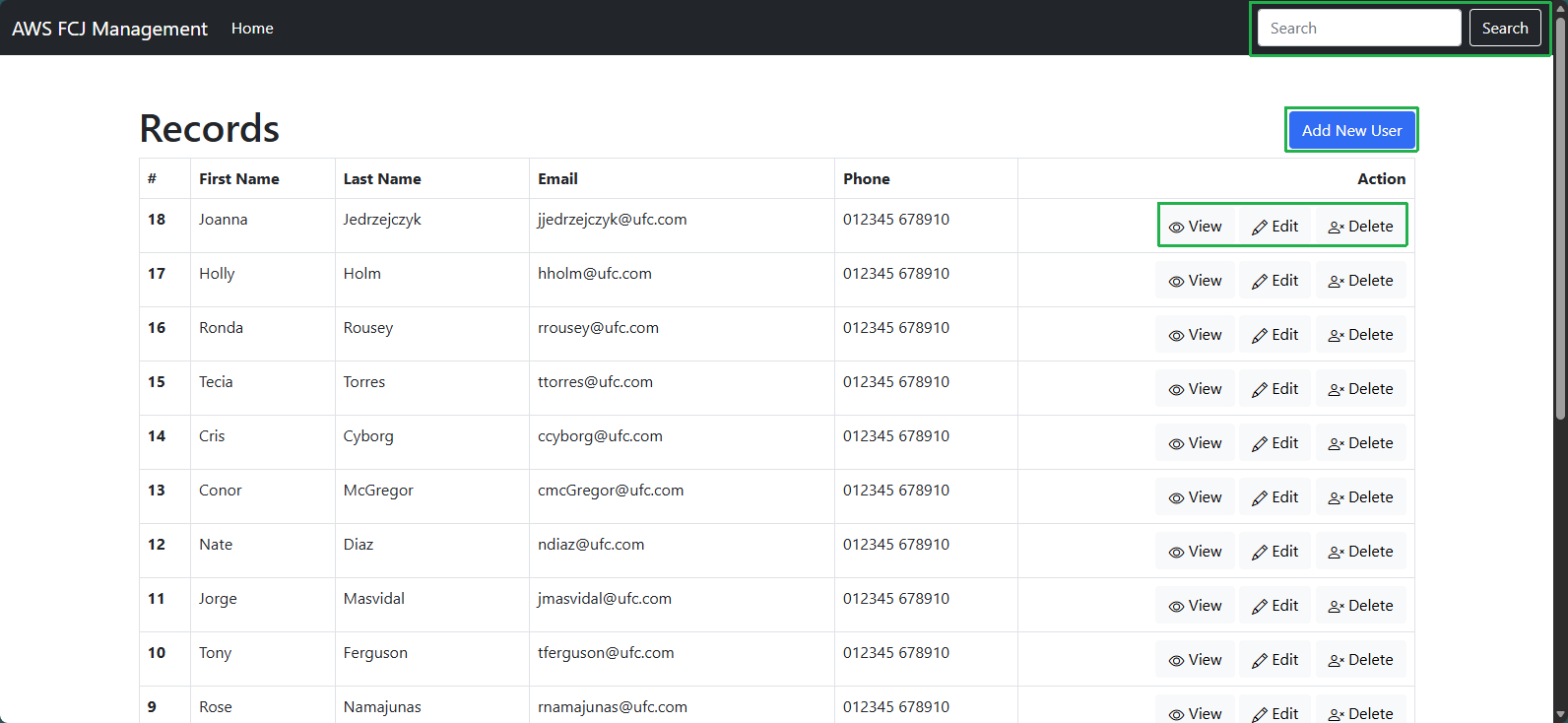
Refresh the application interface
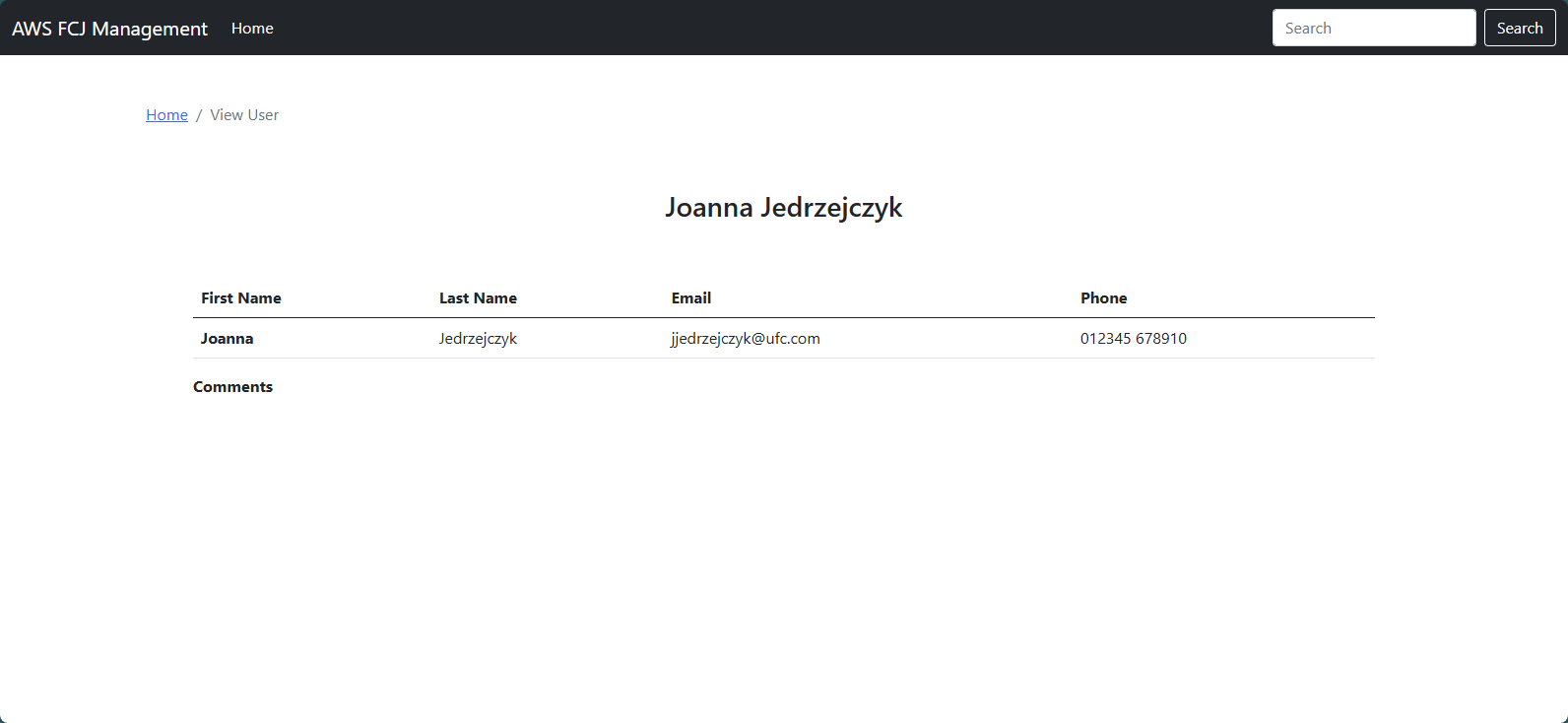
- View the user
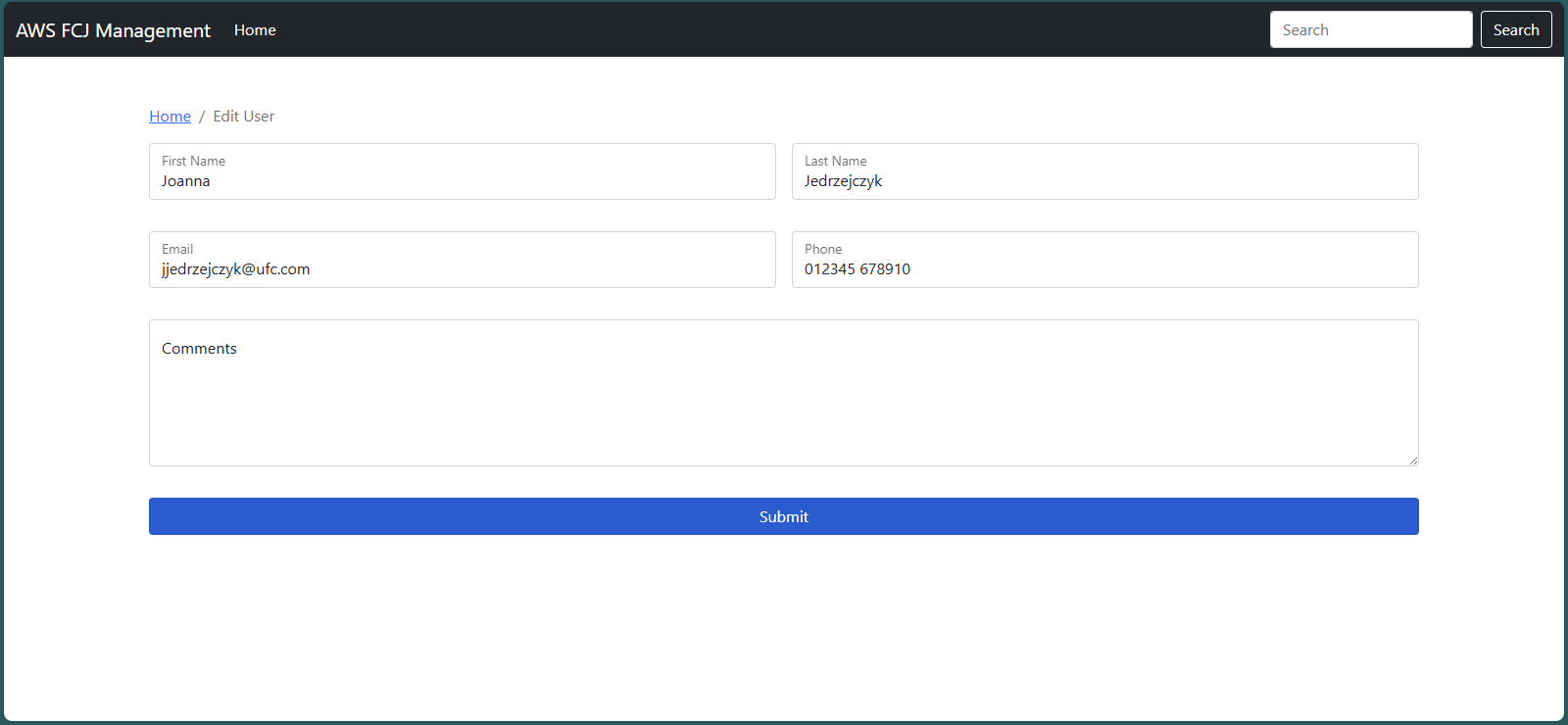
- Edit users
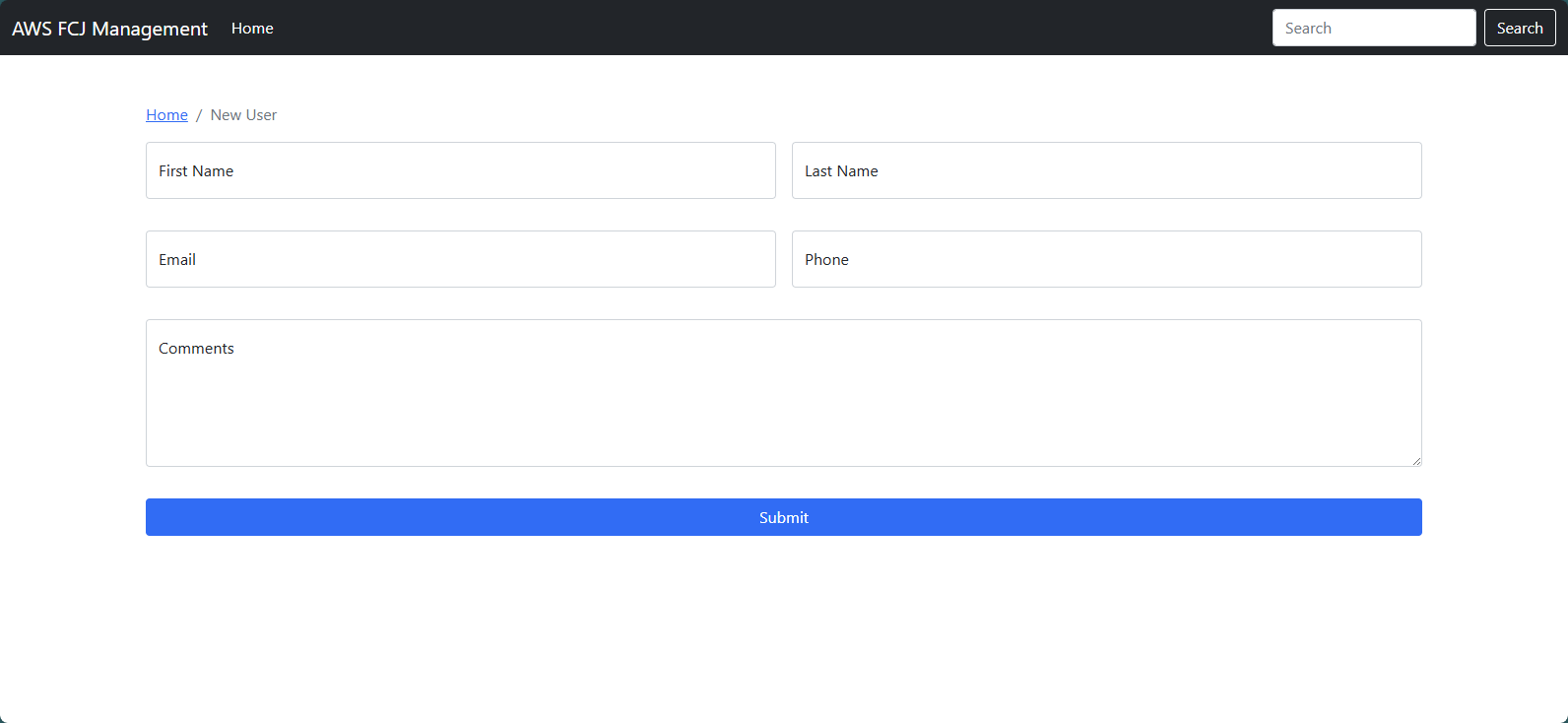
Add users
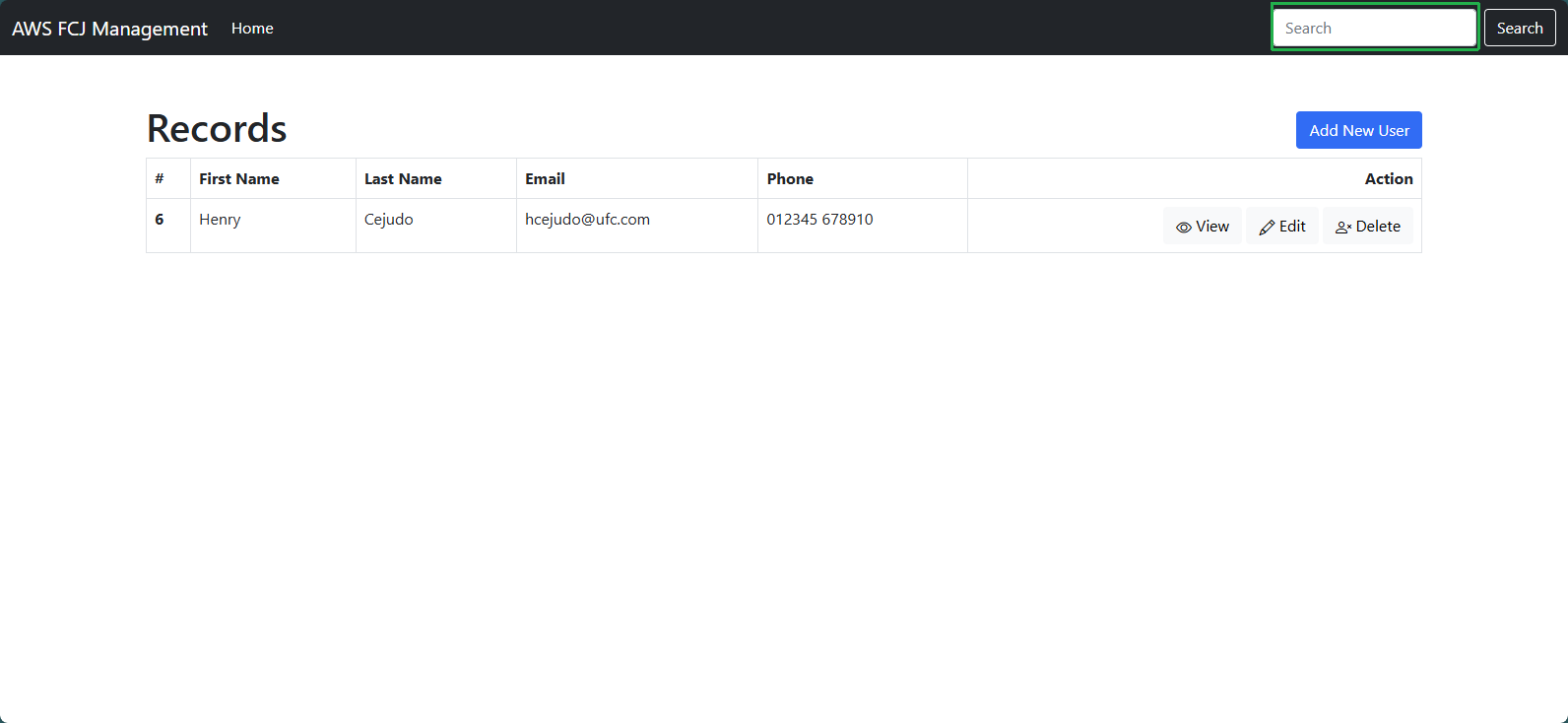
Search for users
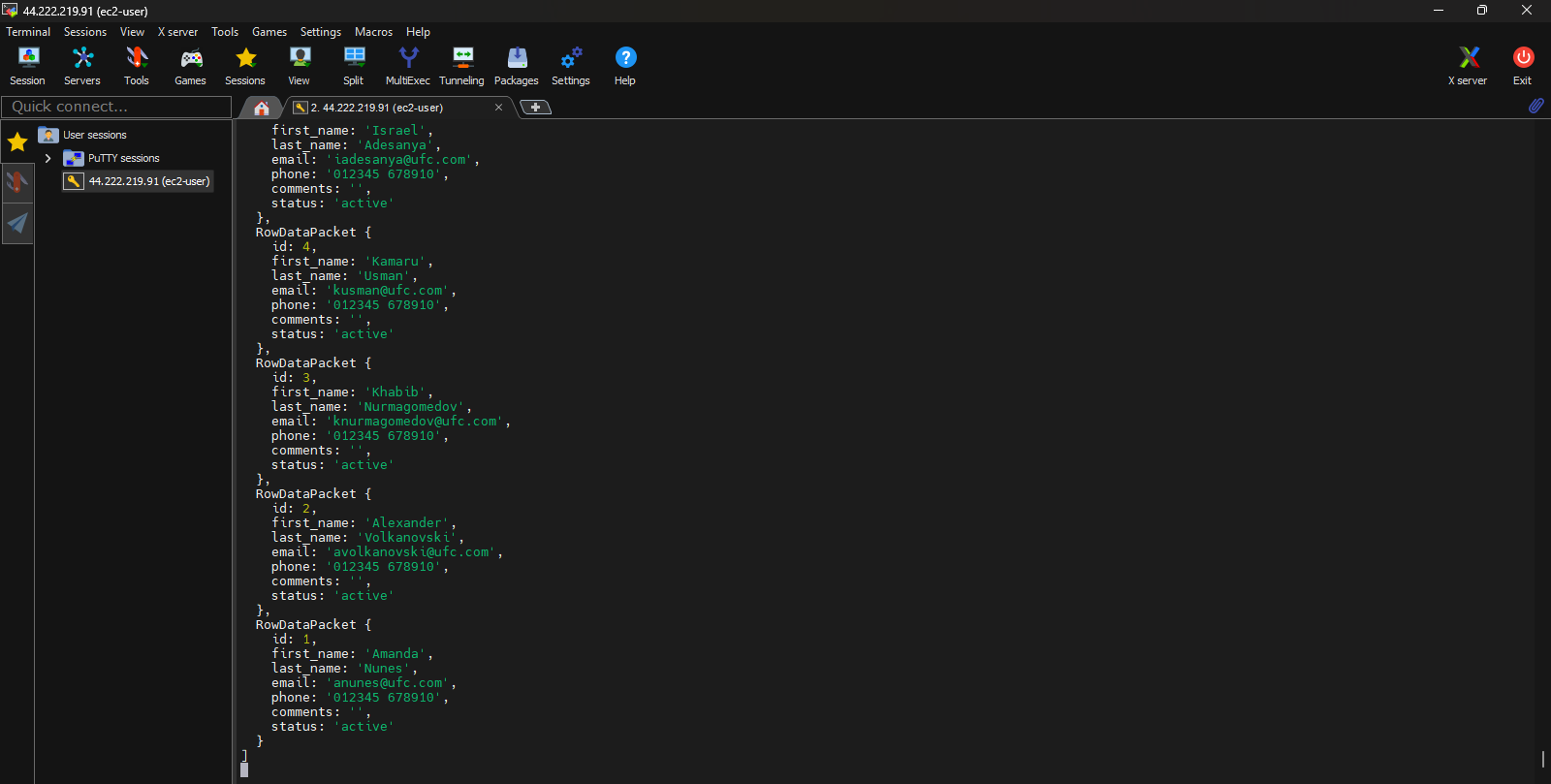
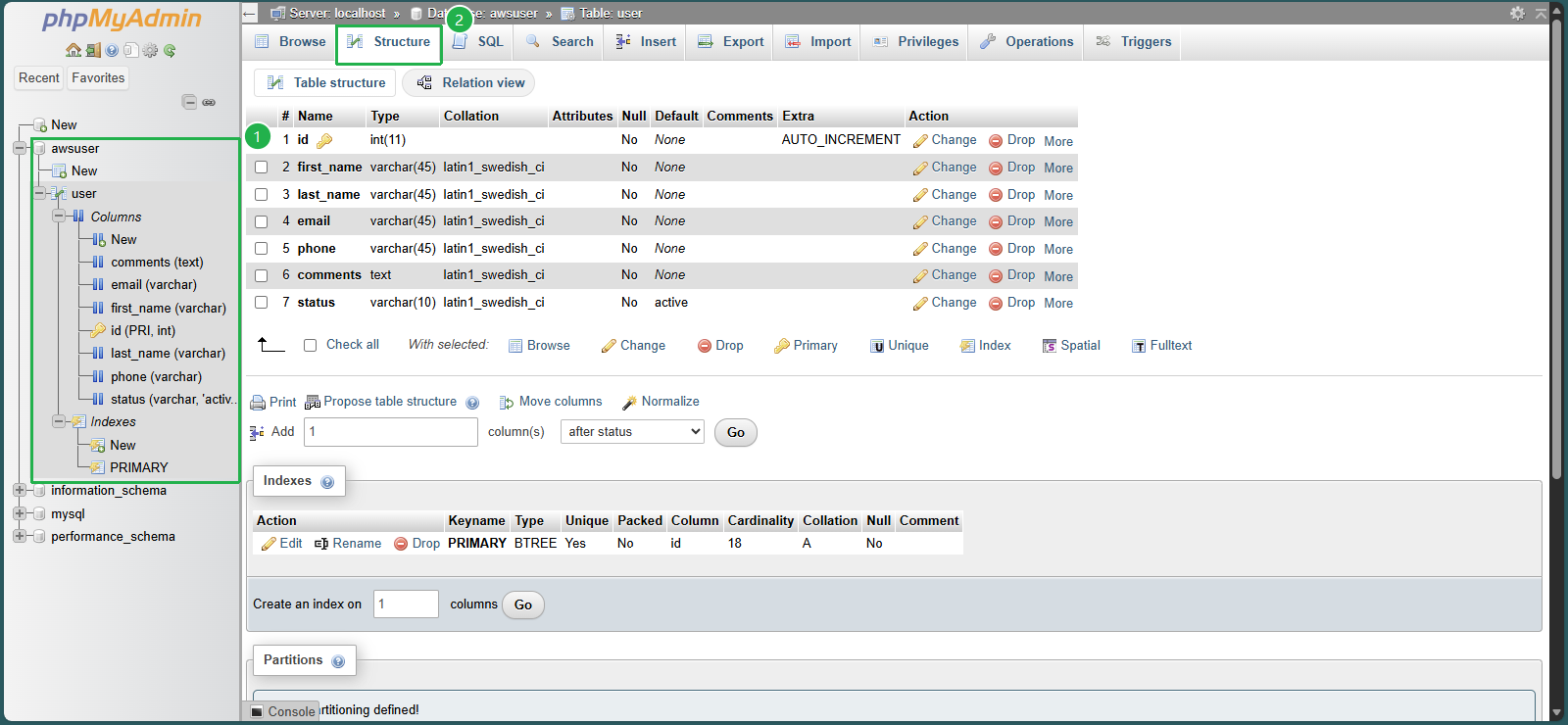
Database after inserting the item
The interface of the instance when starting the local server